
No Comments

Dipula Announces Intention to Acquire R1.27bn Property Portfolio

Article originally appeared on PropertyWheel (10 November 2017)

Dipula Income Fund today announced its intention to acquire a diverse property portfolio for a purchase consideration of R1.27 billion, taking Dipula’s total portfolio value to more than R8.5 billion. The forward yield of the acquisition is 11.7%.  


Dipula CEO Izak Petersen says: “This acquisition is in line with our strategy of acquiring quality enhancing properties which offer opportunities to extract additional value through redevelopments and refurbishments. The weighted average lease expiry profile of the portfolio is defensive at over four years, while tenant quality is superb given that 97% of the GLA is let to multinational, national and strong regional tenants.”  The acquisition is expected to be yield-enhancing. The portfolio boasts minimal vacancies at 0.8%. The transaction complements Dipula’s existing portfolio of 174 properties valued at approximately R7 billion with a total gross lettable area of 757 363m² including retail, office and industrial properties. In addition to this acquisition, Dipula concluded transactions for quality assets to the value of R277 million during the year. Once all assets have been transferred the portfolio will be worth R8.5 billion.

The portfolio being acquired comprises of two retail properties in Gauteng, Chilli Lane and Chilli on Top, totalling 18 433m²; five office properties across Gauteng and the Western Cape totalling 23 138m²; as well as three redevelopment properties.  As part of the same transaction Dipula will also acquire , a 50.1% stake in a portfolio consisting predominantly of industrial properties for a total price of R209 million.

Petersen explains that this is a further step in Dipula’s consistent portfolio growth path which has been more than 300% since listing through portfolio-enhancing acquisitions such as this one. “Once fully implemented we are confident that the liquidity of our shares will improve. The acquisition maintains our emphasis on owning a diversified portfolio and in particular aligns with our commitment to seeking growth through extracting additional value from our portfolio to continue delivering distribution growth.” The expanded portfolio will add further diversity to Dipula’s assets, thereby boosting resilience in a tough economic environment.

The acquisition remains subject to certain conditions precedent.
No Comments

A Multi Billion-Rand Development for CT City

Article originally appeared on Moneyweb (24 October 2017)

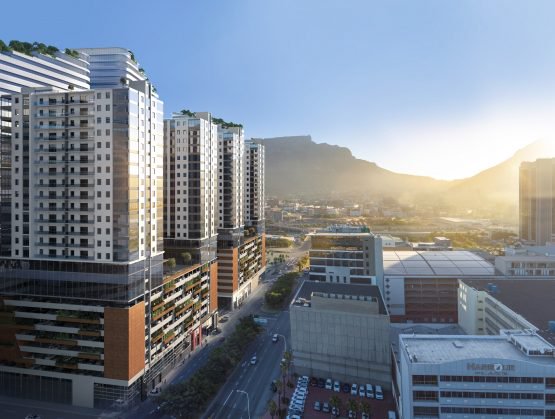
Amdec, the developer of Melrose Arch and shareholder in Val de Vie and Pearl Valley estates is to invest billions over the next five years in the development of a mixed-use precinct on the Cape Town Foreshore.


Modelled along the same lines as Melrose Arch in Johannesburg, the new development, Harbour Arch, will incorporate motor dealerships at the street level, several floors of parking, and above that retail, office space, residential apartments and two Marriott hotels.

Situated at the confluence of the N1 and N2, with close proximity to the Cape Town CBD, Harbour Arch will be built on a 5.8 hectare site and will ultimately comprise six individual towers. A landscaped pedestrian walkway on the 8th floor will run the entire length of the precinct and will connect the spaces.

While the site is not vacant – it is home to a number of motor dealerships – it is one of the last, large tracts of land available for development in the city.

The trend towards the development of residential property within Cape Town city began in 2003 with the redevelopment of the original Old Mutual head office – a magnificent art deco building – on Darling Street. “People told us we were mad and the apartments would not sell,” says Pam Golding’s Laurie Wener, who is also selling the Harbour Arch units. “They were snapped up by speculators and young professionals.”

Since then inner-city living has gained in popularity. “Five years ago you could not give away a three-bedroom apartment; today you see families choosing the city over the suburbs,” she adds.

Harbour Arch supports the vision to turn Cape Town into a 24-by-7 city, says executive mayor Patricia de Lille. To facilitate this vision the city has established a regulatory-one-stop shop to help smooth the way for investors such as Amdec.

The city has also released six hectares of land currently occupied by Cape Town’s go-nowhere bridges to developers. The only conditions are that they [the developers] set aside a portion of the land for low-cost housing and invest in solutions to assist with traffic congestion, says De Lille.

Harbour Arch is as far away from low-cost housing as one can get and unashamedly models itself on the global trend towards ‘new urban architecture’ which is redefining city living, says James Wilson, Amdec CEO. “It’s geared to allow for pedestrian traffic at all hours of day and night, and offers residents accommodation together with other lifestyle elements, all in the same location such as shops, gyms, restaurants and cocktail bars, with a huge emphasis on security.”

Obviously there is a price to pay for the convenience that comes with the lifestyle. In Hong Kong residents could pay up to R2 million per m². Number 1 Hyde Square (arguably the most desirable address in London) costs about R1.15 million per m². In the US Trump Towers costs about R550 000 per m² and accommodation in Sydney’s historic Millers Point costs about R220 000 per m². In Cape Town an apartment in the V&A Waterfront recently breached the R200 000 per m² mark, says Wilson.

Thus Harbour Arch, at between R50 000 and R70 000 per m², should be viewed as a steal.

Harbour Arch’s initial development phase – No 1 Harbour Arch – will comprise 432 apartments, two motor dealerships, retail, leisure, and commercial office space. Development kicks off in the first quarter of 2018 and will take 30 months to complete.

About R500 million worth of sales have already been concluded.