No Comments

Fairvest | Why Township Malls Outperform their Suburban Counterparts

Article originally appeared on BusinessLIVE (13 September 2018)

Malls that cater for lower-income shoppers are delivering better returns than their suburban counterparts

Real estate investors may well be tempted to stash their cash elsewhere in light of the disappointing income and share price performances delivered by JSE-listed property stocks this year.

Few SA-based real estate investment trusts (Reits) have bucked the general trend. Fairvest Property Holdings is a notable exception.

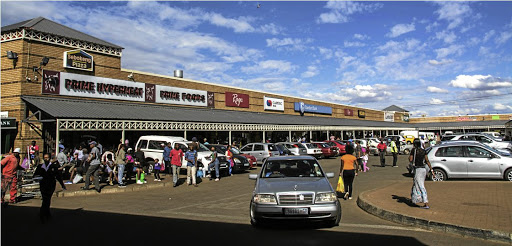
The company, which owns a R3bn portfolio of more than 40 retail centres that cater mostly for lower-income shoppers in townships and rural areas, last week reported dividend growth just short of 10% for the year to the end of June. That’s impressive in a recessionary climate, and nearly double the average 5.5% rise in dividend payouts expected from the sector as a whole this year.

Moreover, Fairvest continues to shine on the capital growth front, notching up a share price gain of about 20% in the year to date versus the SA listed property index’s drop of 23% over the same time.

“Fairvest’s distribution growth of 9.9% was perhaps the silver lining in what has been a pretty cloudy results season. Overall, Fairvest’s was a great result, with no one-off earnings,” says Kundayi Munzara, director and portfolio manager at Sesfikile Capital.

He says it is particularly impressive that Fairvest’s portfolio achieved like-on-like net income growth of 11.7%. It was driven by rental hikes of about 7%, new lettings that pushed vacancies down from close to 5% to a low of 3.5% in the year to June, and improved cost recovery. Munzara says these numbers are indicative of management “sweating the assets”.

He believes other smaller property stocks could take a leaf out of Fairvest’s book: “The company compensates for lower liquidity and diversity by delivering sector-beating results, and its management team has a deep understanding of the portfolio, with a business plan for each property.”

Though the loan-to-value ratio of a relatively low 25% poses an opportunity for Fairvest to acquire more assets without tapping the capital markets, Munzara says the low level of debt that is fixed is a concern.

“Only 46% of Fairvest’s debt is fixed, versus the sector average of more than 70%. The risk of limited hedging is that earnings could be [lowered] should local interest rates and funding costs rise,” he notes.


The question for investors who haven’t yet bought Fairvest shares is whether they have missed the boat. It doesn’t appear so. Ian Anderson, chief investment officer at Bridge Fund Managers, says Fairvest has been one of the fund’s preferred holdings for quite some time and remains an attractive buy at current levels of about 230c a share, given the company’s above-market growth prospects over the next two to three years.

Despite Fairvest being the top-performing SA Reit over five and 10 years in terms of total returns, Anderson says it surprisingly still trades at a discount to its NAV.

He ascribes that to its relatively small size, which means the company tends to attract few institutional investors.

“Double-digit growth in net property income is what sets Fairvest apart from its peer group. The company’s focus on low-income mass-market retail in a sector where disposable income is supported by social welfare grants has clearly paid dividends,” says Anderson.

He adds that management has delivered on its growth promises year in and year out, without the market taking much notice. “But I think a few more investors will look at Fairvest following last week’s results announcement, particularly on the back of disappointing outlook statements from Growthpoint, Hyprop and the Resilient group over the past few weeks.”

Kelly Ward, investment analyst at Metope Investment Managers, has a similar view.

“Fairvest now trades at a forward yield of 9.9%, which we believe to offer good value in the current market.”

Ward says Fairvest’s pleasing set of results comes at what is clearly a very trying time for SA consumers because of rapidly rising living costs, including recent VAT and fuel price hikes, in a contracting economy. Even more encouraging, she says, is that Fairvest has forecast dividend growth of a further 8%-10% for the year ending June 2019 when many local counters are offering investors growth in line with inflation at best.

“We believe there is more pressure to come for the consumer, and very few green shoots given SA’s recent GDP numbers and forecasts,” says Ward.

At the results presentation last week, Fairvest CEO Darren Wilder said he believes the company’s competitive advantage is that it is a simple business with a specific focus. “We let our space and we collect rentals. We don’t pay any fees or one-off profits as part of our distributions, so we don’t have to reset our base as some other companies are doing these days.”

Wilder stressed that management doesn’t intend to change its investment strategy. “Our focus will remain on retail properties that cater for the lower LSM market.

“And we are not going offshore or into the rest of Africa.”

Referring to Fairvest’s target market, Wilder said there’s no doubt that lower-income shoppers are more resilient in an economic downturn than middle-and higher-income consumers. “Our malls cater mostly for daily shoppers who typically spend R80 a visit on a basket of food.

“They have very little debt, are often recipients of social grants and don’t have to pay for housing, electricity or water.

“[Their] disposable income as a percentage of total earnings is much higher than that of middle-and higher-income households, which are now under pressure.”

No Comments

The Successful Redevelopment of Pretoria’s Hatfield Square

Article originally appeared on africanism
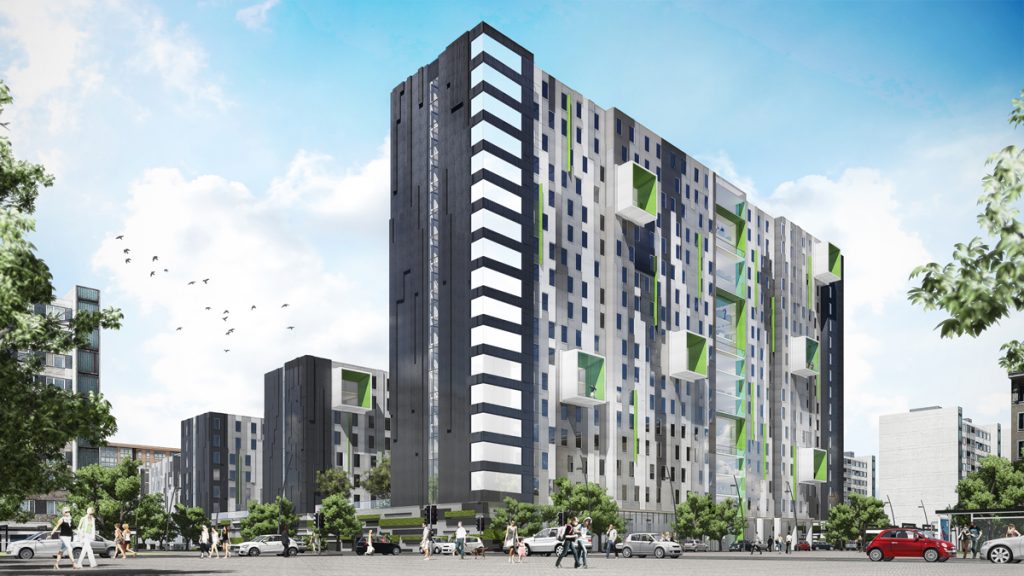
Hatfield Square is a student housing development providing 2200 beds to students in the Hatfield area of Pretoria. The building, designed by Paragon Architects, is owned by Redefine and Respublica, and managed by Respublica Student living. The 51 000sqm development (excluding basements) has reinvigorated the former Hatfield Square social hub, a local watering hole for students in Pretoria, by providing 3500sqm of retail, with a mix of restaurants and line shop tenants on the ground floor square facing Burnett Street.

The redevelopment of the student residence was designed around the concept of a village with consideration given to all aspects of student life in order to create a mixed-use development where students can live, study and play in a safe, accessible environment.

Various sun studies were undertaken to optimise building heights to ensure that all rooms have maximum access to air and light. The result is a precinct of four interlinking buildings, or ‘neighbourhoods’, arranged around a series of intimate courtyard spaces where students can enjoy the smaller neighbourhoods within their blocks. Each building is defined by its ‘theme’ colour which is visible internally and externally.

“It’s an exciting development which stands out in its surroundings, and once complete, Block D, facing Prospect Street will be the highest building in the area,” notes Antoinette Kloppers, Senior Project Architectural technologist at Paragon Architects. “The design not only ensures that each unit has maximum access to views and light, but also has the added benefit of promoting individual communities with their own amenities and shared spaces, within the larger scheme.”

Five modular unit types – ranging from single and double sharing, single en suite with own kitchenette, double sharing en suite and apartment style unit with four beds and own ablutions and kitchenette – create a variety of rental options, with common study rooms and lounge/kitchen areas on each floor. Units are serviced daily and resident students have access to free Wi-Fi and 24 hour security, while facilities include a rooftop gym (which overlooks the Retail Square), computer centre, large study centres, recreational rooms, laundry facilities, swimming pool, landscaped gardens and braai areas. In total, there are 85 common facilities spread out over the four buildings and seven courtyards within the development, six of which are exclusive to resident student use

The precinct benefits from different scales of public, semi-public and private spaces. Common areas are defined on the façade with sculptural forms and colours which link back to the neighbourhood theme, while rooms are defined on the façade by an array of window patterns that reflect the diversity of accommodation types. “The Burnett Street side of the development acknowledges the history of Hatfield Square by recreating an active lifestyle courtyard, where students and the public can socialise and enjoy a variety of retail offerings and restaurants,” says Kloppers.

Energy efficiency, as with all Paragon’s buildings, was a cornerstone of the Hatfield Square project. The building was constructed with AAC (Aerated Autoclaved Concrete) blocks, which contributed to speed and ease of construction. The blocks also have great thermal and fire insulation properties. Terraco South Africa assisted with coating advice onto the AAC block. Terraco, a leading producer of environmentally friendly finishing materials for the construction industry since 1980, the company’s founding in 1980, installed their EIFS system onto the block work, and also created the relief onto the building by using EPS (Expanded Polystyrene) with various textured finishes of the Terraco coating in three shades of grey to create an interesting relief pattern on the façade.

“The building has been designed to have natural ventilation, water storage tanks and heat farms to minimise the energy consumption of the development,” explains Kloppers. “The residence is also fully equipped with water storage tanks and electricity supply services in the events of shortages.”
The use of sustainable products such as AAC blocks and the use of natural ventilation works well in the climate in which the project is located, while the development responded to the culture of the area by reinstating student living with collaborative spaces, socialising, and pedestrianizing the precinct due to the close proximity to the Gautrain and University.

About Paragon
Paragon Architects, established in October 1997, is an internationally-active African design business, based in Johannesburg, South Africa. It is the originator of the Paragon Group of design businesses, delivering commercial architecture, master planning, interior design and space planning to visionary clients in all property sectors. As a Group they are committed to Africa, and believe in the future of its cities. Each project is unique and is not driven by style, but by lifestyle and a response to user needs. Elegant and efficient planning form the core of our designs. They understand the needs of their clients, and know how to generate ever new architectural forms in a competitive property market.

About Terraco
A leader in the formulation, design and production of environmentally friendly finishing materials, Terraco prides itself on providing innovative, green solutions to the construction industry. Since its founding in 1980, Terraco uses carefully selected raw materials and production techniques, resulting in products that promote health, ensure comfort, improve energy efficiency and provides a sophisticated finish. Available in over 75 countries, via 32 companies & 18 factories. Terraco has a production capacity over 650 000 tons, with more than 250 million square metres of product applied annually. Terraco’s mission is to be the leading producer of environmentally friendly finishing materials for the construction industry. Our core values are Innovation, Excellence and Life.

LOCATION: Pretoria, South Africa
ARCHITECTS: Paragon Architects
PROJECT TEAM: Estelle Meiring, Anthony Orelowitz, Mila Ravid, Antoinette Kloppers, Ilona Botes, Ricardo Andrade, Tom Hill, Miguel Gandra, Mouaz Sabha, Leanie van Brummen
CLIENT: Redefine and Respublica
YEAR: 2017
PHOTOGRAPHS: Tristan McClaren/Paragon Architects


No Comments

New Discovery Head Office is Certified Green

Article originally appeared on eProperty News (17 October 2017)

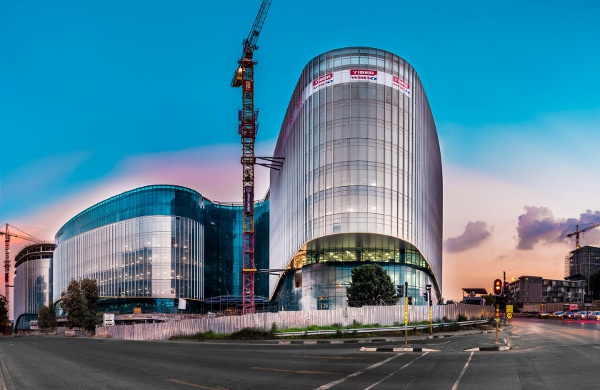
The new Discovery global headquarters in Sandton Central has become the largest new build project to receive a 5 Star Green Star rating by the Green Building Council South Africa (GBCSA) to date.


Developed in a joint venture by two of South Africa’s leading property companies, Growthpoint Properties Limited and Zenprop Property Holdings, the iconic new 112,000sqm resource-efficient, cost-effective and environmentally-innovative Discovery head office is the largest single-phase commercial office development in Africa.

From its design to construction and operation, sustainable development has been a key priority for Discovery, Zenprop and Growthpoint.

Growthpoint Properties Office Division Director, Rudolf Pienaar, comments: “We are thrilled with the 5 Star Green Star certification achieved for this development, especially considering its scale and complexity. The new Discovery head office is now among the most environmentally sustainable and efficient buildings in South Africa. Green building plays a key role in providing spaces in which businesses can thrive. We are incredibly proud to be part of the creation of the new global headquarters for Discovery in a building that is both spectacular and sustainable.”

Zenprop Property Holdings CEO, James Tannenberger, says: “This is a significant milestone for Zenprop, especially considering our long history of delivering sustainable and environmentally friendly buildings across all sectors of the property market. Zenprop has been involved with developing Green Star buildings since the commercial rating tool was first launched in South Africa in 2008, so we are extremely satisfied with what the development team as a whole has been able to achieve on a project of this magnitude and profile.”

GBCSA Executive Director: Certifications, Manfred Braune, points out: “It is the largest new building certified as Green Star to date in South Africa, which makes it an incredible achievement. A 5 Star Green Star rating for a building of this size would have been a challenge to achieve, and we congratulate the entire team involved in this remarkable project. The combination of low-tech and hi-tech is outstanding, ensuring the perfect marriage of load reduction through passive features with technology that ensures optimal efficiency.”

Aurecon is responsible for overseeing the delivery of the developers’ and Discovery’s green intent for the building. Their role has been to ensure it has been designed and constructed with the highest sustainability credentials to demonstrate leadership in the transformation of the South African real estate industry.

Features of the new building which have contributed to the rating include energy optimisation through the advanced design features of its envelope and building services. High-efficiency air conditioning that leverages an outside air economy cycle and indoor air CO2 monitoring. Added to this is low-energy lighting, occupant control and daylight optimisation, as well as the building’s standout high-performance double-glazed curtain wall.

The building is wrapped around a series of sunlit atria that plug into a central concourse. The design of the atria and skylights result in an abundance of natural light without compromising occupants’ comfort and energy performance. Grey and rainwater systems, efficient sanitary fittings, efficient irrigation system and water-wise landscaping contribute to the building’s optimal water performance.

Yovka Raytcheva-Schaap, the Aurecon associate for environmentally sustainable design consulting and project management for the project, points out that, most notably, the Discovery building creates an environment that is centred on occupants’ health and well-being.

Raytcheva-Schaap reports: “The design provides for an ample amount of fresh air, thermal comfort, daylight and connection to the exterior. A fully equipped gym, running track, yoga decks and multipurpose courts are set in the indigenously landscaped roof and encourage an active lifestyle, in line with the Discovery Vitality ethos.”

Aurecon’s Martin Smith adds that the expansive ground floor of the building accommodates Discovery’s retail partners, client services, walk-in centre, staff restaurants and coffee shops, offering an energising experience to both visitors and staff alike.

Smith says: “Upper floor plates, designed for activity-based working, enhance staff collaboration, enjoyment and business efficiency.”

Located on the corner of Rivonia Road and Katherine Street, diagonally opposite Sandton City and one block from the Sandton Gautrain Station, the building comprises three linked office towers which consist of a ground floor, eight office floors and a roof level, which holds Discovery’s sports facilities. It will also offer nine basements with over 5,000 parking bays.

Discovery is expected to take occupation of the property, which is owned by Growthpoint (55%) and Zenprop (45%), towards the end of this year.

No Comments

Dipula Announces Intention to Acquire R1.27bn Property Portfolio

Article originally appeared on PropertyWheel (10 November 2017)

Dipula Income Fund today announced its intention to acquire a diverse property portfolio for a purchase consideration of R1.27 billion, taking Dipula’s total portfolio value to more than R8.5 billion. The forward yield of the acquisition is 11.7%.  


Dipula CEO Izak Petersen says: “This acquisition is in line with our strategy of acquiring quality enhancing properties which offer opportunities to extract additional value through redevelopments and refurbishments. The weighted average lease expiry profile of the portfolio is defensive at over four years, while tenant quality is superb given that 97% of the GLA is let to multinational, national and strong regional tenants.”  The acquisition is expected to be yield-enhancing. The portfolio boasts minimal vacancies at 0.8%. The transaction complements Dipula’s existing portfolio of 174 properties valued at approximately R7 billion with a total gross lettable area of 757 363m² including retail, office and industrial properties. In addition to this acquisition, Dipula concluded transactions for quality assets to the value of R277 million during the year. Once all assets have been transferred the portfolio will be worth R8.5 billion.

The portfolio being acquired comprises of two retail properties in Gauteng, Chilli Lane and Chilli on Top, totalling 18 433m²; five office properties across Gauteng and the Western Cape totalling 23 138m²; as well as three redevelopment properties.  As part of the same transaction Dipula will also acquire , a 50.1% stake in a portfolio consisting predominantly of industrial properties for a total price of R209 million.

Petersen explains that this is a further step in Dipula’s consistent portfolio growth path which has been more than 300% since listing through portfolio-enhancing acquisitions such as this one. “Once fully implemented we are confident that the liquidity of our shares will improve. The acquisition maintains our emphasis on owning a diversified portfolio and in particular aligns with our commitment to seeking growth through extracting additional value from our portfolio to continue delivering distribution growth.” The expanded portfolio will add further diversity to Dipula’s assets, thereby boosting resilience in a tough economic environment.

The acquisition remains subject to certain conditions precedent.

No Comments

A Multi Billion-Rand Development for CT City

Article originally appeared on Moneyweb (24 October 2017)

Amdec, the developer of Melrose Arch and shareholder in Val de Vie and Pearl Valley estates is to invest billions over the next five years in the development of a mixed-use precinct on the Cape Town Foreshore.


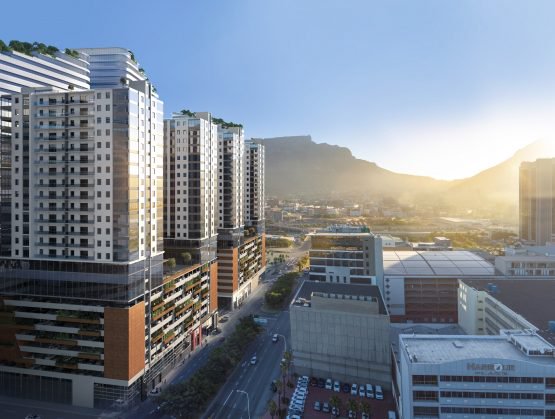
Modelled along the same lines as Melrose Arch in Johannesburg, the new development, Harbour Arch, will incorporate motor dealerships at the street level, several floors of parking, and above that retail, office space, residential apartments and two Marriott hotels.

Situated at the confluence of the N1 and N2, with close proximity to the Cape Town CBD, Harbour Arch will be built on a 5.8 hectare site and will ultimately comprise six individual towers. A landscaped pedestrian walkway on the 8th floor will run the entire length of the precinct and will connect the spaces.

While the site is not vacant – it is home to a number of motor dealerships – it is one of the last, large tracts of land available for development in the city.

The trend towards the development of residential property within Cape Town city began in 2003 with the redevelopment of the original Old Mutual head office – a magnificent art deco building – on Darling Street. “People told us we were mad and the apartments would not sell,” says Pam Golding’s Laurie Wener, who is also selling the Harbour Arch units. “They were snapped up by speculators and young professionals.”

Since then inner-city living has gained in popularity. “Five years ago you could not give away a three-bedroom apartment; today you see families choosing the city over the suburbs,” she adds.

Harbour Arch supports the vision to turn Cape Town into a 24-by-7 city, says executive mayor Patricia de Lille. To facilitate this vision the city has established a regulatory-one-stop shop to help smooth the way for investors such as Amdec.

The city has also released six hectares of land currently occupied by Cape Town’s go-nowhere bridges to developers. The only conditions are that they [the developers] set aside a portion of the land for low-cost housing and invest in solutions to assist with traffic congestion, says De Lille.

Harbour Arch is as far away from low-cost housing as one can get and unashamedly models itself on the global trend towards ‘new urban architecture’ which is redefining city living, says James Wilson, Amdec CEO. “It’s geared to allow for pedestrian traffic at all hours of day and night, and offers residents accommodation together with other lifestyle elements, all in the same location such as shops, gyms, restaurants and cocktail bars, with a huge emphasis on security.”

Obviously there is a price to pay for the convenience that comes with the lifestyle. In Hong Kong residents could pay up to R2 million per m². Number 1 Hyde Square (arguably the most desirable address in London) costs about R1.15 million per m². In the US Trump Towers costs about R550 000 per m² and accommodation in Sydney’s historic Millers Point costs about R220 000 per m². In Cape Town an apartment in the V&A Waterfront recently breached the R200 000 per m² mark, says Wilson.

Thus Harbour Arch, at between R50 000 and R70 000 per m², should be viewed as a steal.

Harbour Arch’s initial development phase – No 1 Harbour Arch – will comprise 432 apartments, two motor dealerships, retail, leisure, and commercial office space. Development kicks off in the first quarter of 2018 and will take 30 months to complete.

About R500 million worth of sales have already been concluded.


No Comments

Mall of Africa: How the New Giant Stacks Up

Article originally appeared on Moneyweb (21 April 2017)

How does the new kid on the block measure up on one key metric?


Nearly one year after opening, just how well is the Mall of Africa trading? Developer and manager Attacq stated in February that “trading densities exceeded expectations”.

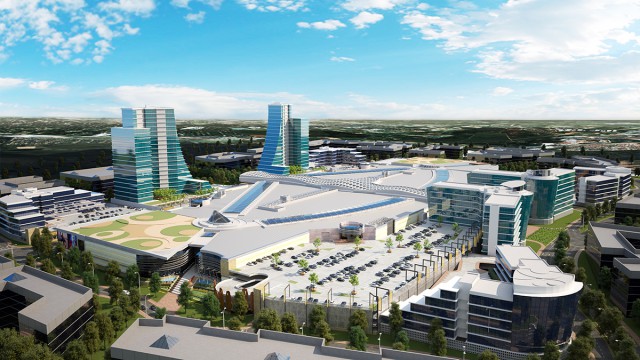
The country’s largest single phase shopping mall, which opened on April 28 2016, “achieved more than 1.1 million visitors per month” through last year. In what could be considered rather limited disclosure, Attacq said a “monthly average trading density of R2 777 per m2” was achieved. Trading density, which measures the the turnover achieved per square metre, is a critical metric for retail. Expansions aside, this is how stores and shopping malls grow: by attracting more shoppers (and better quality range/tenants).

Annual trading densities of selected shopping malls

Nelson Mandela Square₁ R65 043 / m²
Sandton City₁ R52 715 / m²
Hyde Park Corner₂ R50 784 / m²
Canal Walk₂ R43 464 / m²
Somerset Mall₂ R42 156 / m²
Brooklyn Mall₁ R37 644 / m²
Eastgate₁ R37 622 / m²
Clearwater₂ R37 308 / m²
Willowbridge₂ R35 976 / m²
Mall of Africa₃ R33 324 / m²
Rosebank Mall₂ R33 276 / m²

1 12-month average (to 31 December) as published by Attacq and Liberty Two Degrees

Annualised from Hyprop H1 results to 31 December 2016.

Annualised from monthly average provided by Attacq for Mall of Africa since opening (eight months).

Sources: Liberty Two Degrees, Hyprop and Attacq financial reports

On a headline level, Mall of Africa is lagging direct super-regional rivals like Sandton City, Canal Walk and even Eastgate. However, these figures need to be seen in context: the Mall of Africa is a brand new development.

One (albeit not 100% precise) comparison, based on publicly disclosed data, is with Rosebank Mall which underwent a major R1 billion redevelopment in 2013 and 2014. It is about half the size of the Waterfall giant, with a total retail gross lettable area (GLA) of 62 413m2, versus Mall of Africa’s 131 000m2(although, based on Attacq’s reporting of its 80% share as at December 31, the primary GLA seems nearer to 123 000m2).

The Rosebank Mall achieved an average monthly trading density of R2 738m2in the six months to December 31 2015. This aligned almost perfectly with the reopening of the substantially bigger (and completely developed) mall. That reported trading density was a 33% increase on the prior period (when the centre was effectively a giant construction site). On an annualised basis, the trading density soon after reopening translates to R32 856m2. One wonders just what expectations Attacq had set for Mall of Africa.

Also, when it comes to malls, not all trading densities are created equal. Certain sizes of malls and categories of tenants will generate different trading densities.

In an extraordinarily detailed trading statistics and supplementary information document, Liberty Two Degrees, with stakes in Sandton City, Nelson Mandela Square, Melrose Arch and Eastgate (among other assets) provides colour on trading densities achieved at its malls. In the accessories, watches and jewellery category, Nelson Mandela Square achieved annual trading density of R253 052m2 (with 5.6% of gross lettable area), while Sandton City reported a figure of R212 991m2 (only 2% of GLA). Food services, which makes up 36% of GLA in Nelson Mandela Square, had a trading density of R55 552m2, while in adjoining Sandton City it was slightly lower at R52 802m2 (3% of space).

Data for malls such as Menlyn Park and Tyger Valley (both owned by PIC property arm Pareto) and Gateway Theatre of Shopping and Cavendish Square (both Old Mutual Properties) is not publicly available. Surprisingly, few other property funds with large retail portfolios, including Growthpoint, disclose specific trading densities of their assets. All Growthpoint will say about performance of the V&A Waterfront, in which it holds a 50% stake, is that it has the “best trading density compared to other super regionals in [the] country”. This would suggest it is easily over the R50 000m2 (annualised) mark.

For Attacq, key to growing and sustaining footfall during the week at Mall of Africa will be the completion of office and residential developments in Waterfall. In its H1 results to December 31, it says “trading is expected to increase as Waterfall City and its surrounds continue to densify, extracting further value from Mall of Africa in the years to come”.

The mega developments of new head office campuses for PwC (45 000m2) and Deloitte (43 000m2) will certainly help. These two projects alone will bring an additional 7 000-plus employees to within walking distance from the mall. The incredible development in the Sandton CBD, especially surrounding Sandton City, means it will take decades for Waterfall to achieve the same densities its Sandton rival enjoys, and it’s not clear that it ever will….

No Comments

SAPOA Operating Cost Report April 2017

Article originally appeared on Property Wheel (24 May 2017)


Key findings:

  • For the year ended December 2016, all property operating costs equated to 34.4% of gross income. This is down 60bps from December 2015 but well off the highs of 2011 when a gross cost to income ratio of 37.5% was recorded at an all property level.
  • Of the three major sectors, industrial property was the only on to report an increase in its cost to income ratio – a 230bp increase to 32.0% over the twelve months to December 2016.
  • The office and retail property sectors both reported improvements on the previous December’s cost to income figures.
  • Municipal charges – comprised of rates and taxes, electricity and other utility charges – continues to drive the overall increase in costs. As a cost category, municipal charges accounted for 63% of total costs as at December 2016.
  • Over the years, municipal charges have increased at a significantly faster rate than the other cost categories – becoming a bigger slice of a bigger pie in the process.
  • On a sector level, industrial property’s municipal charges make up the largest percentage of total costs at 72.8% – followed by retail and office with 62.5% and 61.1% respectively.
  • The office sector currently has a higher weighting in repairs/maintenance/tenant installation with a contribution of 10.7% to the overall cost line – higher than retail & industrial.
  • Retail property currently has a higher weighting to the Management & Leasing Commission category.
  • Overall operating costs increased by R5.28sqm per month for the year ended December 2016. The biggest driver of this increase was Municipal Charges (+R4.8sqm). Municipal charges are comfortably the largest cost category at R33.34/sqm with the rest being roughly equally split between the other major cost categories.
  • As a percentage of gross income, retail property segments are seeing the highest level of operating costs on an aggregate sector level.
  • Small retail segments such as Community  (12 – 25k sqm) and Neighbourhood (5 – 12k sqm) centres are reporting levels in the low 40%’s – a function of higher vacancy rates and rental incomes that are growing slower than costs.
  • Prime offices are amongst the best placed segments with regards to operating costs as a percentage of gross income at 29.9%.
No Comments

Real Estate Investments in South Africa increased by R28 billion

Article originally appeared on SA Commercial Prop News (25 April 2017)

Investment volumes in South Africa’s real estate saw a 55,2% increase in 2016, despite economic challenges, weak currency and political uncertainty.


Real estate consulting firm, JLL SSA, has released its 2016 Investment Review of the South African property market with analysis reporting a R28.8bn increase in investment, from 18,5bn in 2015, and a similar 52.8% increase in gross lettable area (2 million square metres).

Whilst portfolio sales contributed notably to this value, (key portfolio deals included purchases by Tradehold, Imbali Properties, Delta and Mendo) investments still grew by an exponential 28.0% if the Tradehold is excluded.

South Africa’s property market saw a 55,2% increase in investments in the 2016 period, despite challenging economic conditions.

JLL SSA Head of Research, Zandile Makhoba reports that the investment growth in 2016 is the highest the company has seen in the past five years, which is interesting in the light of the perceived over-supply amongst developers in the market.

Total Investment Transactions Value by Property Sector


“This is a good reflection of investors seeing value in existing fixed assets, as well as long term confidence in the economy.  It must be noted that on closer inspection, we have seen a slowing in greenfield investments over the past few years. For instance, the growth in new commercial building plans has reduced from a peak of 25% in 2012. This is considered a mitigation against a potential over-supply which could stifle rental growth as investors look to upgrade existing buildings and improve their value, rather than to break new ground adding new lettable area to existing stock,” she said.

Total Investment Transaction by Province

From a geographic perspective, Gauteng continues to dominate activity, accounting for 50% of the total investment value in the year. However, KwaZulu-Natal and Western Cape showed stronger investment growth, both more than doubling the investment levels of 2015.  Industrial activity dominated KZN’s growth.

In the commercial office space, investments continued to show healthy growth in 2016. A total of R8.3 million was invested in existing office stock, a growth of 8.9% on a y/y basis.

Makhoba comments that KZN recorded the most growth in the year with sales more than doubling at R781 million. The rise was largely driven by the Tradehold portfolio purchase from Collins Property Projects, she says. Then in the Western Cape, demand for investment property has been on the rise, with the City of Cape Town attracting both local and international occupiers. “Office investments are highly valued given the region’s potential, with the result that investors have adopted a hold-everything strategy in the city.”

On the retail front, in 2016 there is compelling evidence of transactional interest returning to key metros, after three years of growth outside the major metropolitan areas. 83 retail properties – the highest number of recorded deals since 2011- ranging from community to small regional malls were transacted in 2016. “Overall investment value amounted to R7.18 billion in 2016, with the Western Cape passing the R1bn mark with a value of R1.39 billion in investments in the year”, says Makhoba. Three high quality transactions contributed to most of this value, including Eden Meander, Makro Cape Gate and Somerset Value Mall. Makhoba also reports it was a year for buyers with the average purchase price for retail investment properties declining from R12, 982/m2 in 2015 to R9, 054/m2 in 2016.

The report confirms a notable increase in 2016 industrial investment activity. “It was the only asset class to record double digit growth in completed new builds at 14%”, says Makhoba.  It also saw a 25% increase in number of industrial accommodation transactions. It is worth noting that there was major growth in interest in Eastern Cape properties, accounting for 44.4% of transactions in the other province’s category (excluding Gauteng, KwaZulu-Natal and Western Cape). This further emphasises the growing potential within the industrial sector. Another point of interest is the potential for brownfield investments in this asset class. Makhoba says that relatively lower building costs and the potential to expand and upgrade industrial properties is an investment opportunity, given the growing preference for maxi-unit accommodation. This is even more important in areas with limited or expensive land options such as Gauteng, KwaZulu-Natal and Western Cape.

Looking ahead, whether buying or selling, investors remain conscious of the economic climate which could affect their investment returns. Although forecasts for GDP show an improvement in the next three years, with the National Treasury anticipating a 2.2% growth rate by 2019, these levels are insufficient to stimulate significant employment growth, with far reaching implications for the broader economy.